

Building a robust hotel network requires a multi-layered approach to handle high-density traffic, maintain guest privacy, and ensure 24/7 uptime for critical operations like Point of Sale (PoS) and Property Management Systems (PMS).
the core networking components and their roles.
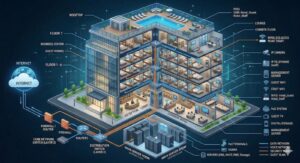
1. Core and Distribution LayerThe “brain” of the hotel network starts at the ground level, typically housed in a climate-controlled Main Server Room.Firewall/Router: Acts as the primary gateway, managing traffic between the ISP and the internal network. It handles security protocols, VPNs for corporate staff, and prevents external intrusions.Core Network Switch (Layer 3): This high-performance switch manages inter-VLAN routing. It ensures that data moves efficiently between the server room and the various floors without bottlenecks.Distribution Switches: These connect the core to the access layer (the individual floors). They often use fiber optic backbones to maintain high speeds across large distances in the building.
2. Network Segmentation (VLANs)Security in a hotel is achieved by keeping different types of traffic isolated from one another. This is done through VLANs (Virtual Local Area Networks):VLAN TypePurposeSecurity LevelGuest WiFiHigh-bandwidth internet for guests; isolated from all other hotel data.Isolated / RestrictedStaff WiFiAccess to internal PMS, housekeeping apps, and inventory.SecureSecurity/CCTVDedicated lane for IP Cameras to ensure video lag is minimized.Critical / PrivateVoice/VoIPHigh-priority traffic for IP phones in guest rooms and offices.High Priority (QoS)ManagementFor the servers (DNS, DHCP, PMS) and network hardware configuration.Top Secret / Restricted
3. The Access Layer (Floors 1-7)This is where the network meets the user. Each floor utilizes a “star topology” where a local switch feeds into various endpoints.Wireless Access Points (WAPs): Strategically placed in hallways and common areas (Lobby, Lounge, Pool) to provide seamless roaming. They support multiple SSIDs (e.g., Hotel_Guest and Hotel_Staff).IP Telephony (VoIP): Replaces traditional analog lines, allowing for cheaper long-distance calling and easier integration with the hotel’s front desk system.IP Cameras: Connected via PoE (Power over Ethernet) switches, allowing the camera to receive both power and data over a single Cat6 cable.
4. Common Areas & Business ServicesSpecific zones require specialized hardware to handle unique tasks:PoS Terminals: Located in the restaurant and lounge, these require a highly secure, low-latency connection to process payments instantly Digital Signage: Networked screens in the lobby and elevators that pull content from a central management server Business Center: Provides wired Ethernet drops and secure printing services for guests.